Civil Liberties, Criminalizing Dissent, Gaza, Habeas Corpus, Human Rights, Military Tribunal, NSA Spying, Political Prisoner, Surveillance, Targeting Muslims, Truth to Power, War Resister
Podcast: Play in new window | Download
Updates:
- RE/MAX Cashes In On Israel’s Illegal Settlements – Code Pink Calls For RE/MAX Boycott Campaign
- US Senate Votes Down USA Freedom Act
- Michael Ratner: President Obama Doesn’t Need Legislation To Stop The NSA, He Can Simply Direct the NSA Not To Collect Meta-Data
—–
Academic Freedom Case Gains Traction
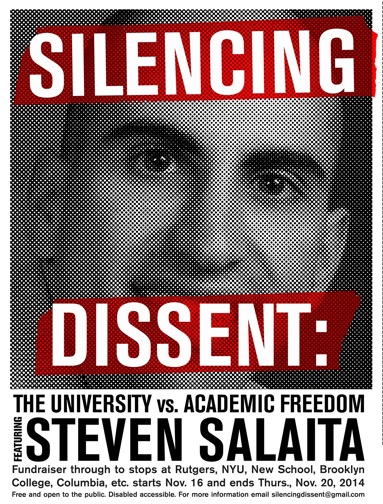
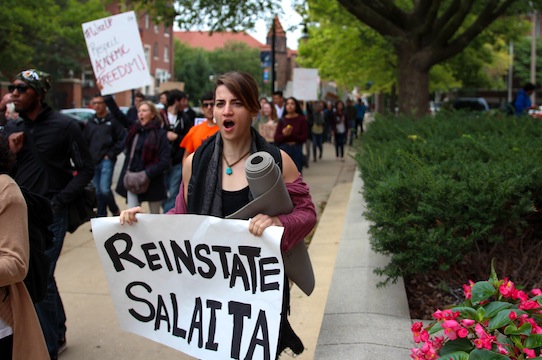
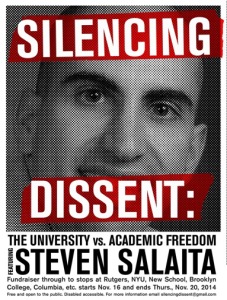
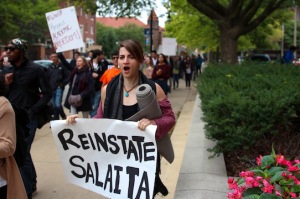
Since the University of Illinois at Urbana-Champaign Board of Trustees rejected Professor Steven Salaita’s candidacy for a tenured faculty appointment to the American Indian studies program, Salaita has been giving presentations about his case and the importance of academic freedom. Initially we reported here on Law and Disorder that Professor Salaita was un-hired from the American Indian Studies program at the University of Illinois at Urbana-Champaign because of his statements on social media criticizing Israel’s conduct of military operations in Gaza. Emails within the University revealed under Freedom of Information Act Requests show that it was outside pressure from donors that influenced the University of Illinois Chancellor’s decision to dehire Salaita.
Professor Salaita:
- My Dad grew up in Jordan, my Mom in Nicaragua. I grew up in West Virginia.
- I got my undergraduate and Master’s degree from a small regional college in south west Virginia called Radford University and I got my PhD in Native American Studies from the University of Oklahoma.
- My interest in Native American studies developed from a Native American novel course I took in college. It generated a profound interest in the histories of settlement and dispossession in North America which struck me as similar in important ways to the forms of dispossession that Palestinians have suffered in the Middle East.
- I submitted my application in October of 2012. I was offered the job in September of 2013. Signed the contract of October of 2013.
- The contract was countersigned by university officials and it was made formal. At that point it was announced that I had accepted the job.
- The process was nearly 2 years long from submission of the application to the signing of the contract.
- Any search process in the humanities or social sciences starts with a search committee of 4-6 people. They’ll look over a candidate’s cover letter. They’ll examine a candidate’s scholarship and they’ll examine that scholarship in detail.
- Once the search committee has made its selection it has to go to other committees throughout the university. A committee composed of representatives from the college. In my case the college of liberal arts and sciences.
- Because I was coming in with tenure I also had to be vetted by external referees, anywhere from 4 to 6. They basically read all of my scholarship. I had to send them all of my books, all of my scholarly articles, my teaching dossier.
- Given the statements that Israeli leaders have made, “mowing the lawn in Gaza”, “putting the people in Gaza on a diet” and their long standing discourse about demographic threats and a surplus of Palestinians . . . its hard not to think about those statements and debates when Israel carpet bombs an area twice the size of Washington DC land area that’s also home to 1.8 million people – you can’t help but think its a sort of violence informed by something worse than mere military strategy.
- A right-wing website run by (nominally) Tucker Carlson, the bow-tied gentleman formerly of Crossfire. He’s like he came out of a Republican lab. He wears a bow-tie his name is Tucker.
- His website the Daily Caller, ended up publishing a standard right wing hit piece. We’ve seen them all. Salaita, his tweets are horrible, blah, blah, blah, and by the way he’s going to start a job at the University of Illinois.
- Then the local rag in Urbana Champaign, the News Gazette picked up on the Daily Caller story and the controversy gained steam. The next thing I know I’m receiving an unceremonious termination letter from the chancellor.
- She said she didn’t expect trustee approval so there was no need to show up.
- They called me uncivil then it morphed into anti-semitic.
- Uncivil – – It’s a term that’s deeply rooted in colonial violence, that always implies something sinister without ever having to explain its intent or its meaning.
- It’s a wonderful term for shutting down debate. The entire southern hemisphere was colonized based on notions that they were uncivilized.
- The support has been phenomenal. Sixteen departments at the University of Illinois have voted no confidence in the chancellor and the board of trustees.
- I’ve also received support from the Center For Constitutional Rights, the Modern Language Association, a number of trade unions have passed resolutions condemning the university’s decision and demanding my reinstatement.
- The impulse seems to shut down the debate or discussion before it even begins.
- First of all we feel that its a matter of great import to the public interest that the university administration has arbitrarily taken an action that has had negative consequences for the reputation of the university and its ability to function normally.
- As you know the university is undergoing a boycott. It’s normal functions are being disrupted.
- Support Steven Salaita
Guest – Professor Steven Salaita, former associate professor of English at Virginia Tech. He is the author of six books and writes frequently about Arab Americans, Palestine, Indigenous Peoples, and decolonization. His current book project is entitled Images of Arabs and Muslims in the Age of Obama.Steven grew up in Bluefield, Virginia, to a mother from Nicaragua (by way of Palestine) and a father from Madaba, Jordan. Books by Salaita
—-

Independent Investigation of APA Ties with Torturers Under Bush Administration
The nation’s largest organization of psychologists is set to conduct an independent review into whether it colluded with or supported the government’s use of torture in the interrogation of prisoners during the Bush administration. In 2011 we reported on health professionals being front and center and complicit in the US policy of torture. The torturers relied heavily on medical opinion. Medical professionals provided sanitizing and rationalization for the infamous torture memos. During water boarding procedures, a doctor would be present. Psychologists were directly involved in the supervision, design and execution of torture at US military and intelligence facilities. This is a violation of state laws and professional ethics. These “health professionals” that were involved with torture still hold their professional licenses to practice.
Dr. Stephen Soldz:
- At this point I think we all know there was a program of torture in the Bush Administration. CIA and the DOD at Guantanamo. Less known was that psychologists were central to it.
- In the CIA, they designed the torture, they were also essential to the legal protection. The Justice Department torture memos basically said that if a health professional, a psychologist or physician is there and says that the interrogation won’t cause severe and long lasting mental harm, than it isn’t torture even if it causes harm.
- In other words, their presence was a get out of jail free card.
- As far as we can see it was central to the Bush Administration’s plans to indemnify themselves while engaging in torture.
- The American Psychological Association apparently worked with the Bush Administration to provide protection for the psychologists who were involved.
- The ethics code had been changed in such a way that it allowed psychologists to disobey the ethics code and follow governmental orders.
- This was actually done before 911 and passed after 911.
- We have been concerned if they (APA) had been complicit in various ways. James Risen from the New York Times just published his new book Pay Any Price and one chapter in there provided direct documentary evidence that APA officials were working with the CIA and the Whitehouse to manipulate the ethics code to apparently allow psychologists to participate.
- Michael Ratner: There was a committee appointed from the APA to look into the APA’s role as I recall . . . Dr Stephen Soldz: . . . to decide on whether psychologists participating in a national security interrogation was ethical – was consistent with the APA’s ethics code.
- They (APA) were not directly involved as far as we know in torture, they were more involved in doing what the CIA and the White House wanted in terms of manipulating ethical understandings.
- We, Amnesty and CCR have called for an independent investigation of the APA for a number of years. We’re glad the APA board has recognized the need.
- They appointed a Chicago attorney who is a specialist in public corruption. We are cautiously optimistic but we have some concerns.
- Its inappropriate for the APA board to appoint its own investigator of whether the APA did something wrong.
- The time frame they gave of 5 months is awfully short for an investigation of this magnitude. We’re hopeful that the investigation will be wide ranging and comprehensive which is what is needed.
- If the accusations in Risen’s book pan out, you have to look at his office (APA CEO) If he knew that means he approved of it. If he didn’t know that means he was incompetent.
- This has been the issue that has divided the APA in the last decade.
- What was most needed by the intelligence community was that it was ethical for the psychologist to participate in the interrogation.
- One of the key people who was in the Bush White House at this time who is implicated is Susan Brandon who is now a top official in Obama’s high value detainee interrogation group.
- If the Republicans win, torture will probably come back.
- Since the Nuremberg trials where Nazi doctors were executed for conducting unethical experiments, informed consent has been the backbone of human subjects research.
- Yet the APA put in this clause – – if laws or institutional regulations (that’s a very broad category institutional regulations) don’t require informed consent and psychologists don’t have to do it.
- If my drug company says I don’t need informed consent . . .there’s no reason why the APA should get rid of informed consent for anything but the most trivial and harmless research.
- They’ve never explained where this comes from and its still in effect.
- Ethicalpsychology.org
Guest – Dr. Stephen Soldz, psychologist, psychoanalyst, and public health researcher in Boston, and was a co-author of PHR’s report Experiments in Torture. He is the Director of the Center for Research, Evaluation, and Program Development at the Boston Graduate School of Psychoanalysis. He was Adjunct Assistant Professor of Psychology (Psychiatry) at Harvard Medical School, and has taught at the University of Massachusetts Boston, Boston College, and Boston University.
———————————————————————————

Please help support Law and Disorder. This radio show is now a sponsored project of Fractured Atlas, a non-profit arts service organization. Contributions for the charitable purposes of Law and Disorder must be made payable to Fractured Atlas only and are tax-deductible to the extent permitted by law. You can donate as little as 5.00 a month.
CIA Sponsored Terror, Civil Liberties, Criminalizing Dissent, Guantanamo, Habeas Corpus, Human Rights, Military Tribunal, Surveillance, Targeting Muslims, Torture, Truth to Power, War Resister
Podcast: Play in new window | Download
Updates:
- Heidi Boghosian Updates Listeners On The Revictimization Relief Act
——
Michael Smith Returns From Argentina Book Tour
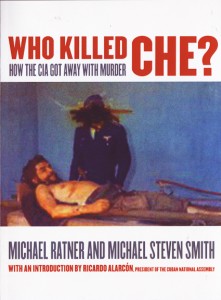
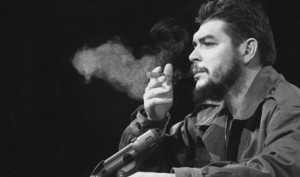
Early October marks the 47th anniversary of Ernesto Che Guevarra’s capture and assassination in Bolivia. Co-hosts Michael Ratner and Michael Smith have authored the book Who Killed Che? How The CIA Got Away With Murder. Michael Smith has recently returned from a trip to Buenos Aires to promote the Spanish language version of the book. Michael explains how Che was a threat to the United States by helping Cuba take over their own economy and why its important to set the story straight about Che’s death. Review of Who Killed Che?
—–
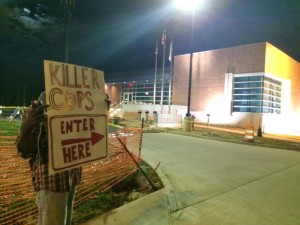
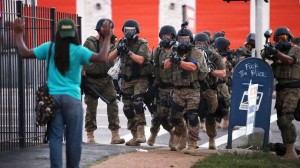
Weekend of Resistance: Ferguson, St. Louis Protests and the National Lawyers Guild
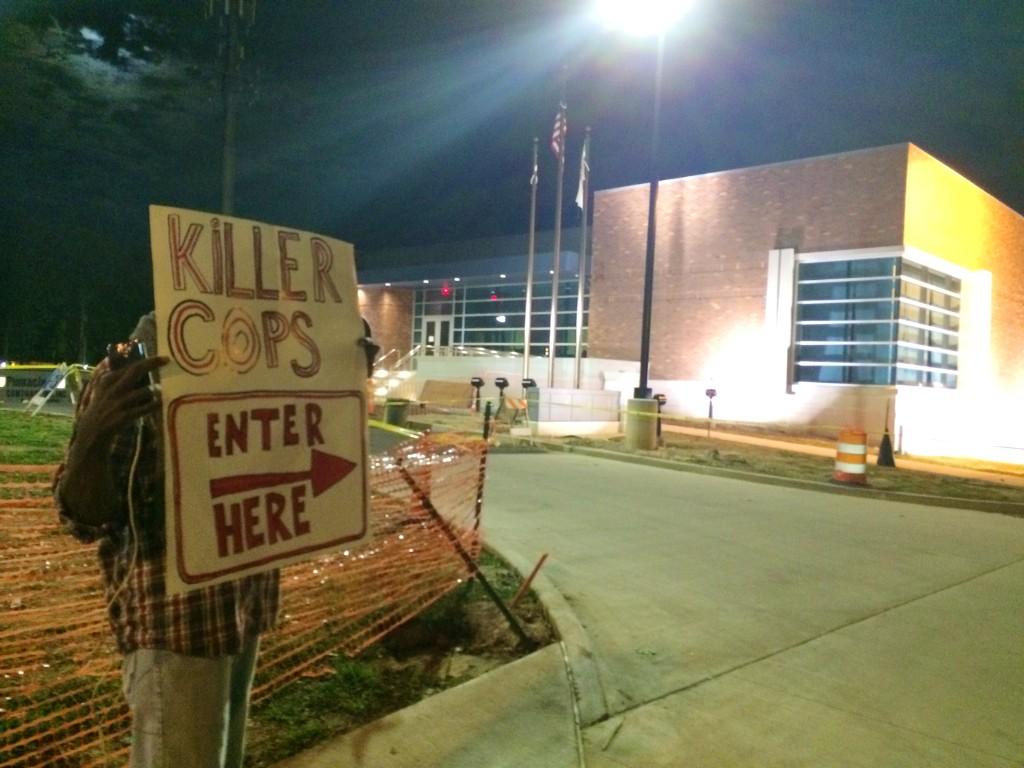
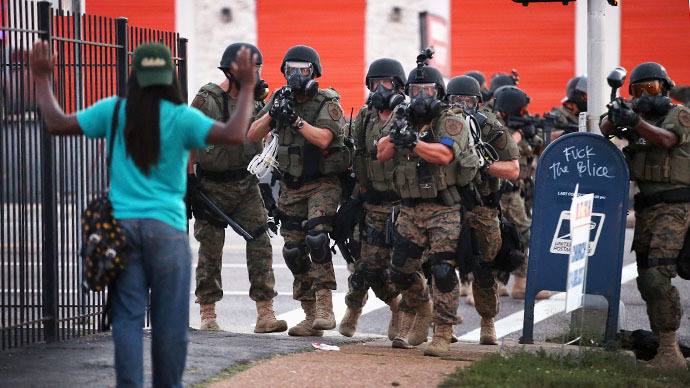
Last weekend, thousands of protesters in Ferguson, Missouri just outside of St. Louis demonstrated during a long planned Weekend of Resistance to the militarized suppression of peaceful demonstrations against the the killings of unarmed black teenagers including Michael Brown two months ago. Demonstrators traveled from cites across the country to participate in protests against police violence – including sit ins and vigil marches. Meanwhile, National Lawyers Guild members have been providing legal support, legal observation and felony representation for people arrested during the weekend. We catch up with St Louis Lawyers Guild member attorney Maggie Ellinger-Locke who has been working long hours representing arrested demonstrators. There are 90 municipalities in St. Louis and Maggie also explains the challenges in helping those arrested get processed through a unique court system.
Attorney Maggie Ellinger-Locke:
- People poured into the streets after the killing of Mike Brown and have pretty much been occupying various locations around the St. Louis area and protesting ever since.
- We at the National Lawyers Guild have mobilized close to 100 legal observers at this point to come down and do the observing and training people who are local.
- We’ve also been connecting people who are facing felony charges with representation as well as backing up the Arch City Defenders who are handling the bulk of the ordinance violations and charges.
- In August there were lots of chemical weapons used, tear gas every night. I was tear gassed multiple times. Other major mobilizations that I’ve been to, they last a couple of days, maybe the duration of a week, but this has been a continued onslaught of less than lethal weapons.
- There are a lot of difference agencies on the ground for law enforcement. There’s the Missouri Highway Patrol, St. Louis County Police Department, The Sheriff’s Department and of course we have 90 different municipalities in St. Louis County, each with its own police force.
- This is what it takes to fight back. People are out there every day on the streets.
- We’ve had NLG members pour in from all over which has really been fun getting to know all these people.
- Monsanto, which is based in Creve Coeur, Missouri, made a donation recently of a million dollars to various community groups doing work on the ground. On the other hand we’ll have a local pizza company board up and then the owner will train a gun on protesters to intimidate them.
- The demands have varied depending on the organizations. Indicting Darren Wilson, the officer who shot Michael Brown is at the top of everyone’s list. In order to achieve that you would have to have demand number 2 met which is that Don McCullough, the St. Louis County prosecuting attorney recuse himself from this case. People think that he’s conflicted in that his father was a white police officer who was shot by an African American man and killed.
- Another big demand is that the many many municipal charges that people are facing be dropped.
- In addition we desperately need reform of our municipal court system. The structure is insane.
- We’re hopeful that if we can demand jury trials for all of those arrested, we may in fact be able to crash the system.
- We have 40 people now who are facing felonies.
- The Organization For Black Struggle and Missourians Organizing for Reform and Empowerment.
Guest – Attorney Maggie Ellinger-Locke, National Lawyers Guild member and activist, and a partner with Ellinger & Assoc., P.C., a Law Firm in O’Fallon, Missouri.
——-
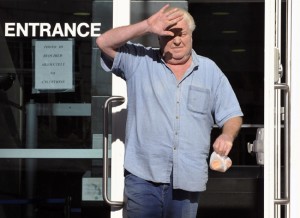
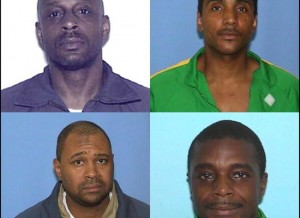
Jon Burge, Torturer of Over 100 Black Men, is Out of Prison After Less Than 4Years
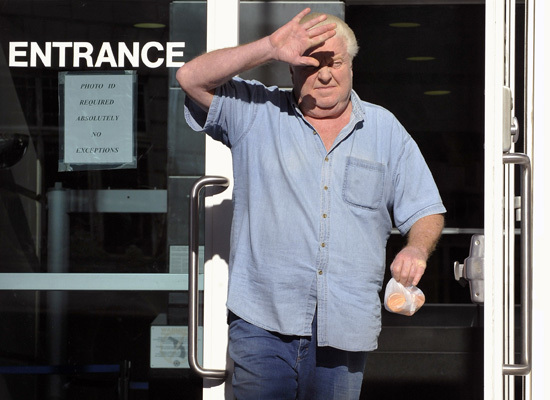
Last week former Chicago police commander Jon Burge who was convicted of lying about torturing more than 100 African-American men at Chicago police stations will be released from the Butner Correctional Institution and reporting to a halfway house in Tampa, Florida. This, as many listeners know is an ongoing story that we’ve been reporting on for many years with Attorney Flint Taylor with the People’s Law Office in Chicago who worked on the case representing some of the torture victims. We talk about why Jon Burge was released and his recent article titled Jon Burge, Torturer of Over 100 Black Men, is Out of Prison After Less Than Four Years. Flint reminds listeners that the total in financial damages to taxpayers from the torture of over 100 black men that Burge oversaw, and the ongoing pension payouts to his collaborating officers, exceeds $120,000,000.
Attorney Flint Taylor:
- Burge is a now notorious police torturer here in Chicago. He shot from detective up to commander of a police station based on torturing African-Americans suspects into giving confessions and sending many of them to death row and to life in prison.
- Ultimately, we were, along with community activists, expose this pattern and practice of 100 cases of police torture.
- This was by electric shock, by bagging people and other kinds of racist brutality.
- We exposed it and nothing happened for many years. Ultimately the Feds, indicted Burge, several years ago, not for torture because the statute of limitations had run on that, but rather for perjury and obstruction of justice.
- He was convicted by a predominantly white jury and ultimately sentenced to 41/2 years in the penitentiary.
- After 31/2 years, he was permitted to go to a halfway house for 6 months.
- What’s happening now? What’s happening with regard to the men who are still in the penitentiary, decades later, and there are almost 20 of them, based on tortured confessions.
- How about the men who testified against Burge, who were his victims?
- Those men, unlike Burge who gets a pension now, and the Illinois Supreme Court has upheld his right, even as a convicted felon to collect that money. These men get nothing, have nothing.
- There are as many as 90 of those men on the streets now, with no health care, with no treatment for psychological damage.
- The majority of city council members support at this point reparations for those men. The reparations for those men would be 20 million dollars.
- The same amount of the money the city spent to defend Burge in the cases of the exonerated men.
- We’re now at a sensitive stage, where the mayor, Emanuel has had to come out. He’s no friend to the anti-torture forces, and he’s been asked repeatedly on this.
- He has played both sides against the middle, its time right now where he’s going to have to fish or cut bait.
- We had the strong support of Karen Louis who was a wonderful challenger and she has now had to withdraw from the (mayoral) race because of “health issues.” She was a strong supporter of the reparations ordinance.
Guest – Attorney G. Flint Taylor, a graduate of Brown University and Northwestern Law School, is a founding partner of the People’s Law Office in Chicago, an office which has been dedicated to litigating civil rights, police violence, government misconduct, and death penalty cases for more than 40 years.
——————————————————————————

Please help support Law and Disorder, the show is now a sponsored project of Fractured Atlas, a non-profit arts service organization. Contributions for the charitable purposes of Law and Disorder must be made payable to Fractured Atlas only and are tax-deductible to the extent permitted by law.
CIA Sponsored Terror, Civil Liberties, Criminalizing Dissent, Gaza, Guantanamo, Habeas Corpus, Human Rights, Military Tribunal, NSA Spying, Political Prisoner, Prosecution of the Bush Administration, Supreme Court, Surveillance, Targeting Muslims, Torture, War Resister
Podcast: Play in new window | Download
Updates:
- Michael Ratner: Moazzam Begg Freed After Terrorism Charges Dropped
- Michael Ratner: 149 Inmates In Guantanamo Bay Prison – 79 Approved For Transfer
——-
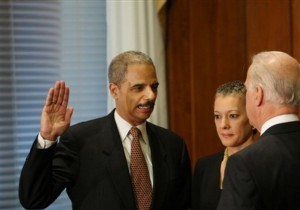

U.S. Attorney General Eric Holder Evaluation
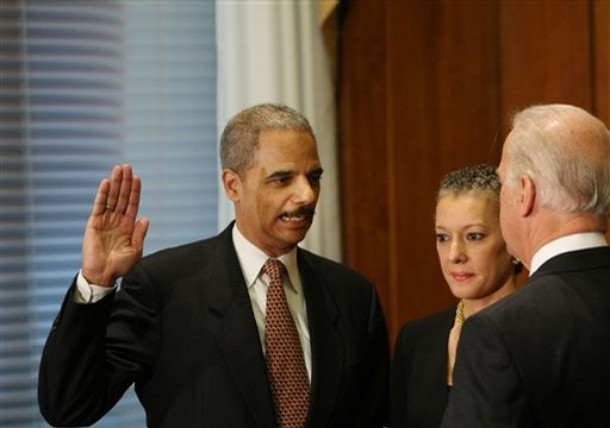
Michael Ratner and Heidi Boghosian draw a balance sheet on the record of U.S. Attorney General Eric Holder.
- Holder approved drone killing of American citizen al-Awlaki without due process.
- Holder failed to prosecute any of the Bush Administration officials who were openly admitted torturers.
- Holder abrogated the responsibility in holding corporate criminals accountable. Wall Street.
- Holder settled with HSBC for 2 billion, the bank was caught laundering money for drug cartels yet no prosecution.
- With-Holder prosecuted whistleblowers, Chelsea Manning, Julian Assange, Edward Snowden, James Risen, Jeremy Hammond, Fox News Reporter,
Law and Disorder Co-host Attorney Heidi Boghosian, executive director of the A.J. Muste Memorial Institute, a nonprofit charitable foundation providing support to the nonviolent movement for social change. Before that she was executive director of the National Lawyers Guild. She is author of the book “Spying on Democracy: Government Surveillance, Corporate Power, and Public Resistance” (City Lights, 2013) as well as several reports on policing and the First Amendment.
Law and Disorder Co-host Attorney Michael Ratner, President Emeritus of the Center for Constitutional Rights (CCR), a non-profit human rights litigation organization based in New York City and president of the European Center for Constitutional and Human Rights (ECCHR) based in Berlin. Ratner and CCR are currently the attorneys in the United States for publishers Julian Assange and Wikileaks. He was co-counsel in representing the Guantanamo Bay detainees in the United States Supreme Court, where, in June 2004, the court decided his clients have the right to test the legality of their detentions in court. Ratner is also a past president of the National Lawyers Guild and the author of numerous books and articles, including the books Who Killed Che? How the CIA Got Away With Murder, The Trial of Donald Rumsfeld: A Prosecution by Book, Against War with Iraq and Guantanamo: What the World Should Know, as well as a textbook on international human rights.
——-
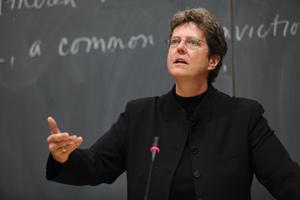
Academic Freedom & Political Dissent: A Conversation with Katherine Franke and the Community
We continue to report on Professor Steven Salaita’s case and the concerns regarding established principles of academic freedom. We hear a presentation by Katherine Franke, Professor of Law at Columbia University. Listeners may recall that Professor Salaita was unhired from the American Indian Studies program at the University of Illinois at Urbana-Champaign because of his statements on social media criticizing Israel’s conduct of military operations in Gaza. We reported last month on Law and Disorder that scholars from law schools around the country came out with a letter condemning the decision of the University of Illinois to unhire Professor Salaita. Katherine Franke discussed Salaita’s case at the University of Illinois at Urbana-Champaign late last month.
Speaker – Katherine Franke, Isidor and Seville Sulzbacher Professor of Law; Director, Center for Gender and Sexuality Law at Columbia University. She was awarded a 2011 Guggenheim Fellowship, and is among the nation’s leading scholars in the area of feminism, sexuality and race. In addition to her scholarly writing on sexual harassment, gender equality, sexual rights, and racial history, she writes regularly for a more popular audience in the Gender and Sexuality Law Blog. Franke is also on the Executive Committee for Columbia’s Institute for Research on Women and Gender, and the Center for Palestine Studies and teaches at a medium security women’s prison in Manhattan. Her legal career began as a civil rights lawyer, first specializing in HIV discrimination cases and then race and sex cases more generally. In the last 25 years she has authored briefs in cases addressing HIV discrimination, forced sterilization, same-sex sexual harassment, gender stereotyping, and transgender discrimination in the Supreme Court and other lower courts.
—————————————————————-
Please help support Law and Disorder, the show is now a sponsored project of Fractured Atlas, a non-profit arts service organization. Contributions for the charitable purposes of Law and Disorder must be made payable to Fractured Atlas only and are tax-deductible to the extent permitted by law.
Civil Liberties, Criminalizing Dissent, Gaza, Human Rights, Iraq War, Political Prisoner, Surveillance, Targeting Muslims, Torture
Podcast: Play in new window | Download
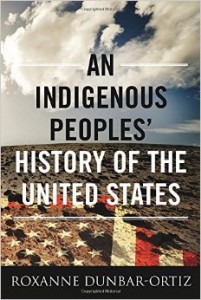
An Indigenous Peoples’ History of the United States
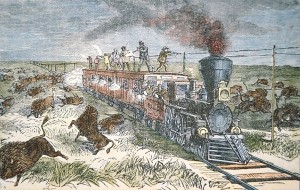
In the United States today, there are more than 500 federally recognized indigenous communities and nations comprising nearly three million people. These are the descendants of the 15 million people who once inhabited this land and are the subject of the latest book by Roxanne Dunbar-Ortiz. In An Indigenous Peoples’ History of the United States, Dunbar-Ortiz challenges the founding myth of the United States and shows how policy against the indigenous peoples was genocidal and imperialist—designed to crush the original inhabitants. Spanning more than 300 years, this classic bottom-up history significantly reframes how we view our past. Told from the viewpoint of the indigenous, it reveals how Native Americans, for centuries, actively resisted expansion of the U.S. empire.
Roxanne Dunbar-Ortiz:
- It’s absolutely necessary to know this history of settler colonialism and how it effects consciousness today of U.S. people and in the world because everyone is convinced of this myth of the United States and somehow its always going off the path of this destiny that has never been true in the first place.
- It’s like a fairy tale except its extremely deadly and dangerous.
- Other countries have romantic myths as their form of nationalism but they don’t control the world with this ideology.
- The myth is that it was a birth of settler democracy but we know from apartheid South Africa, we know from colonialism, particularly settler colonialism such as Israel.
- There are so many parallels with Israel because the Puritans and this became embedded in all settlers, had this idea of the new Jerusalem of Zion. They used that terminology.
- That God had given them this land to settle, it wasn’t just a right it was a responsibility to destiny, to the world.
- This made the native farmer and fisherman, ordinary people like other people in the world into savages and monsters, sort of like the Israelis to do the Palestinians today.
- Throughout the book I have a theme of the militarism and the counterinsurgency that attacks civilians and a food fight they call it, burns the food, supplies, the crops, burns the houses of the people in their towns, creates refugees. This then becomes the pattern.
- Every generation there is this Indian war. Vietnam looked like an Indian war, even the language they use – indian country for enemy territory, all of the weapons they name after native people.
- This is not how we think of the United States, supposedly a civilian country, the military is always under control of civilians but that civilian president is commander and chief of the armed forces.
- There’s also a theory, the Bering Strait the one entrance to the whole continent, which is absurd because all of the people on the coast were great seafaring people.
- A part of European imperialism say as the beginning of everything that it connected people up. Actually what it did was separate people each other and their tradition.
- My specialization is the southwest and central Mexico, Central America. I knew there were complex trade routes and roads all over the place, irrigation canals, how they developed agriculture.
- The first chapter, Follow the Corn, I did just that. I followed out of Mexico, the dispersion of corn agriculture all the way to Tierra Del Fuego to the sub Arctic and coast to coast.
- What you find in the Americas is when they get to the point of abusing the environment and become dictatorial, there tends to be revolts to overthrow, that was happening when Cortez came to Mexico.
- The Quetzalcoatl cult that took over the Aztec government became abusive and was doing slave raiding. Had done a wonderful job of dispersing trade routes. Cortez simply allied with the rebels and overthrew the central government.
- Course they couldn’t know his intentions of simply wiping out their civilization.
- When British colonialism came to North America with these peculiar characteristics of the puritan ideology settling in. With 2 centuries of settler colonialism they developed this idea of ownership.
- It went from owning human beings to the idea of owning the land.
- George Washington was a surveyor and you have to ask why was such a super wealthy – a lowly surveyor?
- Surveyors got to choose the best land, and got to mark it up. They had already developed this idea of a Platte, creating territories that would then become states once they had a majority settler population.
- That’s why it took so long for Oklahoma, Oklahoma was the 47th state, New Mexico, Arizona, these places that had a majority native population.
- It was rough being native in the United States, it still is. I grew up in Canadian county Oklahoma, my dad sharecropped, and was a tenant farmer throughout that area until the depression wiped it out.
- The people went to California as refugees.
- I’m cautious about the identity because native nationalism Cherokee or Onondaga or Shawnee or Creek Muskogee
- There was an instance in 1917, I think its one of the most important moments in US history and hardly anyone knows about it. Jack Womack and I had written about it Monthly Review, it was called the Green Corn Rebellion.
- That is the main demand, land base, nationhood, the ability to prosper and exist as people, not just as individuals being assimilated out, that’s another form of genocide.
Guest – Roxanne Dunbar-Ortiz, grew up in rural Oklahoma, the daughter of a farmer and half-Indian mother. She has been active in the American Indian Movement for more than four decades and is known for her lifelong commitment to national and international social justice issues. After receiving her PhD in history at the University of California at Los Angeles, she taught in the newly established Native American Studies Program at California State University and helped found the departments of Ethnic Studies and Women’s Studies. Her 1977 book The Great Sioux Nation was the fundamental document at the first international conference on Indians in the Americas, held at the United Nations’ headquarters in Geneva. She is the author or editor of seven books.
———
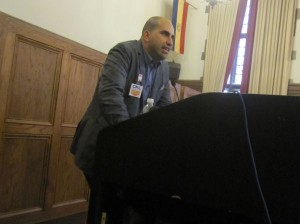
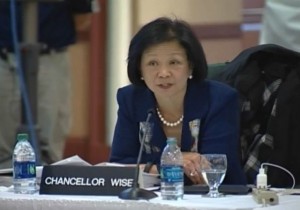
Academic Freedom Case: Professor Steven Salaita
Last Thursday the University of Illinois at Urbana-Champaign Board of Trustees rejected Professor Steven Salaita’s candidacy for a tenured faculty appointment to the American Indian studies program. Initially we reported here on Law and Disorder that Professor Salaita was essentially dehired from the American Indian Studies program at the University of Illinois at Urbana-Champaign because of his statements on social media criticizing Israel’s conduct of military operations in Gaza. Emails within the University revealed under Freedom of Information Act Requests show that it was outside pressure from donors that influenced the University of Illinois Chancellor’s decision to dehire Salaita.
Professor Steven Salaita:
- I received the job offer at the end of September 2013, the first offer was for me to begin on June 2014 but because of my obligations to Virgina Tech and short time for moving we pushed it back to mid August.
- Everything was good to go, we set up movers, my classes were ready to teach they had been assigned to me. I ordered my textbooks, on August 2, I received a letter from the chancellor Phyllis Wise, telling me the termination was going to be withdrawn, so it left me scrambling for what to do, because I already resigned my position at Virginia Tech.
- So all of a sudden I didn’t have a job, at Illinois or Virginia Tech.
- Publicly released documents indicate that donor pressure played a large role in it.
- There’s been some consternation about my tweets about Operation Protective Edge, that’s Israel’s recent invasion of the Gaza Strip and I think that had a lot to do with the donor pressure.
- I think the university is pressing this idea of incivility in social media.
- I think one of the saddest parts of the whole affair is that I hadn’t had the opportunity to join them and become their colleague and work with them (Professors at the American Indian Studies Department) and they’ve been terrific throughout this entire affair.
- Academic hiring happens at the level of faculty, it happens at the level of department and search committees within departments will choose the hire, sometimes the entire department has to sign off on it.
- Then it gets kicked up the dean, then it will get kicked up to the provost or chancellor for their approval, that’s what we call democratic governance on campus.
- It’s kind of an allegory of the position of American Indian nations in the United States and Canada. They’re seen as not being able to make their own autonomous decisions. They’re not allowed to articulate their own practices of sovereignty without the oversight of authorities above them.
- The discourse they used in firing me is remarkable. To describe somebody who has been hired by an American Indian Studies Department as uncivil draws on hundreds of years of colonial discourse that I find shocking.
- It’s an allegory of history and politics that exist in microcosmic form within the framework of the University of Illinois.
- In this case civility means acquiescence to power, and incivility equates to dissent.
- In lots of ways my case has become something of an avatar, a flashpoint for people’s grievances.
- I could really easily be identified with BDS and I think within the past year, 2 things have happened that have caused Zionists to step up their game around this issue. One is the string of boycott resolutions that have been ratified by scholarly organizations by labor unions, by civil rights groups, by churches.
- I think the response to it is not engage on the issues, not to have conversations or debates about the issues but to shut down our side altogether. They don’t want to have debates, they want a silence.
- They don’t want to engage in conversation they want the discussion to be unilateral.
- Support Steven Salaita
Guest – Professor Steven Salaita, former associate professor of English at Virginia Tech. He is the author of six books and writes frequently about Arab Americans, Palestine, Indigenous Peoples, and decolonization. His current book project is entitled Images of Arabs and Muslims in the Age of Obama.Steven grew up in Bluefield, Virginia, to a mother from Nicaragua (by way of Palestine) and a father from Madaba, Jordan. Books by Salaita
—————————————————————————————
Please help support Law and Disorder, the show is now a sponsored project of Fractured Atlas, a non-profit arts service organization. Contributions for the charitable purposes of Law and Disorder must be made payable to Fractured Atlas only and are tax-deductible to the extent permitted by law.
Afghanistan War, CIA Sponsored Terror, Civil Liberties, Criminalizing Dissent, Gaza, Human Rights, Iraq War, NSA Spying, Prison Industry, Surveillance, Targeting Muslims, Truth to Power, War Resister
Podcast: Play in new window | Download
Updates:
——–
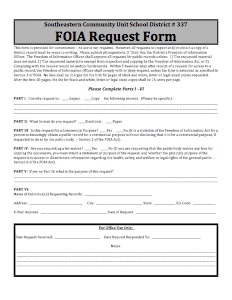
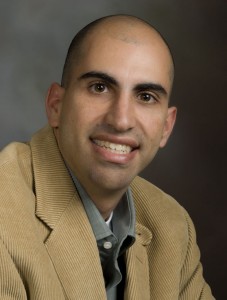
University of Illinois Chancellor Wise Going Forward With Salaita Appointment To Board of Trustees Vote
Last month, the University of Illinois rescinded the job offer of Professor Steven Salaita who wrote controversial social media posts about the war in Gaza. This raised serious concerns under established principles of academic freedom. Professor Salaita was basically dehired from the American Indian Studies program at the University of Illinois at Urbana-Champaign because of his statements on social media criticizing Israel’s conduct of military operations in Gaza. We reported weeks ago on Law and Disorder that scholars from law schools around the country came out with a very strong letter condemning the decision of the University of Illinois to dehire Professor Salaita. FOIA Email Link
Professor Katherine Franke:
- Professor Steven Salaita until recently was a tenured professor at Virgina Tech and was well known in English departments across the country and also among scholars who worked in colonialism and post colonialism studies. He developed a really rich body of work thinking about Native American rights, native people’s rights in the United States and connecting them to Palestinian rights in particular internationally.
- Read Professor Katherine Franke’s second letter here.
- He was a well sought after scholar and was hired by the University of Illinois in their American Indian Studies program in a process that started last fall.
- The department unanimously voted him an offer and this summer the university started to get pressure from outside donors, some of their alums and advocacy groups to not finalize the offer because of some tweets Professor Salaita sent out over the summer related to the Israeli attacks in Gaza.
- The emails to the chancellor were released showing that large six figure donors had seen those tweets or learned of them and said you cannot hire this guy or I will withdraw my future giving to the universities.
- So, the chancellor let Steven know that she was not going to finalize his offer even though they already negotiated his teaching schedule, he’s already rented an apartment, they had already negotiated his moving expenses.
- Right now he has no job, no income, no where to live.
- It’s the most recent iteration of what has been a rather well organized, well financed campaign in the United States in particular to purge the academy of scholars and even graduate students who are doing work that is either sympathetic to the idea of Palestinian sovereignty or rights or critical of Israeli state policy particularly the occupation.
- It was so obviously a violation of the fundamental right of academic freedom.
- I’ve only learned of his scholarship as a result of this campaign and his termination from the University of Illinois.
- I explain to Chancellor Wise in the letter that I sent, that not only will I not come to the university to speak in an official capacity but I will come to Urbana-Champaign and meet off campus with faculty and students, and members of the communities about these issues of academic freedom.
- Their strategy has been to portray any criticism of Israeli state policy or any criticism of political Zionism as uncivil or as a form of hate speech, but more importantly to appeal to a civility norm. That its not nice. That it creates an unwelcome learning environment for students, particularly jewish students.
- To see her parroting that language (Chancellor Wise) and for Chris Kennedy to parrot that language says to me that they’ve been reached by these organized operatives from the outside about how to message this termination.
- I don’t believe there is a civility norm at stake here and I think we actually shouldn’t have one in a university setting. We ought to take on uncivil ideas, ideas that are troubling, that are uncomfortable and unpack them in thoughtful scholarly ways.
- As these emails are coming out under the Freedom of Information Act Requests over the last few days its quite clear that civility is not what underwrote the decision to terminate him. It was really outside pressure from donors.
Guest – Katherine Franke, Isidor and Seville Sulzbacher Professor of Law; Director, Center for Gender and Sexuality Law at Columbia University. She was awarded a 2011 Guggenheim Fellowship, and is among the nation’s leading scholars in the area of feminism, sexuality and race. In addition to her scholarly writing on sexual harassment, gender equality, sexual rights, and racial history, she writes regularly for a more popular audience in the Gender and Sexuality Law Blog. Franke is also on the Executive Committee for Columbia’s Institute for Research on Women and Gender, and the Center for Palestine Studies and teaches at a medium security women’s prison in Manhattan. Her legal career began as a civil rights lawyer, first specializing in HIV discrimination cases and then race and sex cases more generally. In the last 25 years she has authored briefs in cases addressing HIV discrimination, forced sterilization, same-sex sexual harassment, gender stereotyping, and transgender discrimination in the Supreme Court and other lower courts.
———-
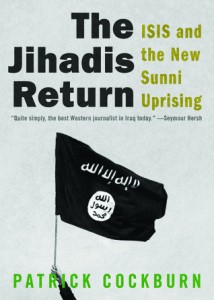
The Jihadis Return: ISIS and the New Sunni Uprising
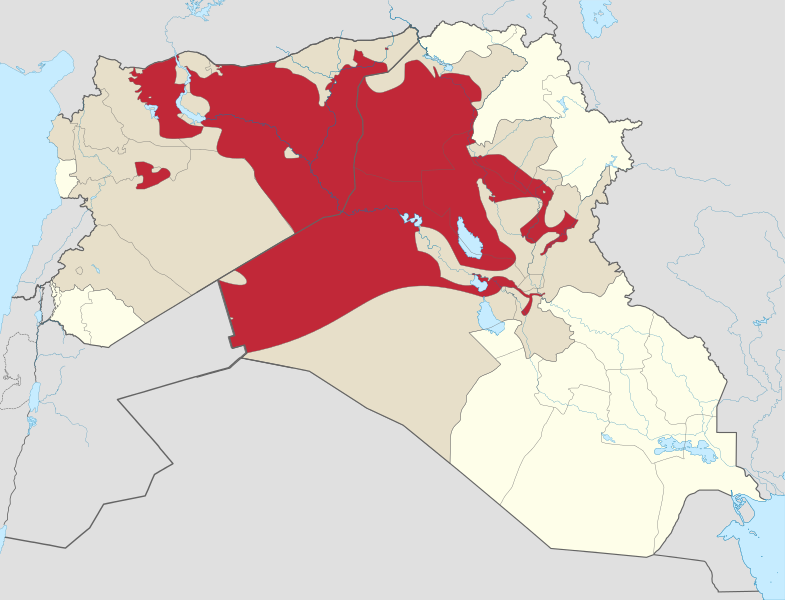
In June of this year, the United States sent more troops to Iraq and carried out airstrikes to stop the advance of the Islamic State of Iraq and the Levant, known as ISIS into the Kurdish capitol Erbil. However, a more complicated situation has developed in Syria. The U.S., Western European, Saudi, and Arab Gulf policy is to overthrow Syrian President Bashar al-Assad, which is also the goal of ISIS and other jihadis in Syria. ISIS’s membership is between 10 and 17 thousand. We talk today with veteran Middle East correspondent Patrick Cockburn about his new book The Jihadis Return: ISIS and the New Sunni Uprising, about the origins of ISIS. We’ll also talk about the role of Saudi Arabia in the larger picture and in funding part of the Sunni terrorist groups, which was exposed by Wikileaks.
Patrick Cockburn:
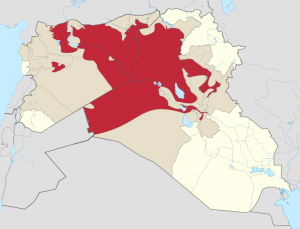
- The Islamic State of Iraq and the Levant, which has turned into the new caliphate in western-northern Iraq and western Syria. It has come out of Al-Qaeda in Iraq.
- This organization that was linked to Al-Qaeda but not formed by Al-Qaeda after the invasion of Iraq in 2003 is very anti-Shia, Sunni fundamentalist is extremely violent.
- What makes it so effective is its a mixture of religious fanaticism and military efficiency.
- Some of the senior people of ISIS are former security officers and special republican guard officers from Saddam Hussein’s time.
- ISIS is led by a core of people who fought the U.S. in Iraq, fought the Iraqi Army, this is after 2003 and then after 2011 fought in Syria.
- So, it’s quite an experienced group.
- It had been growing stronger in Iraq over the last 3 years. It launched a series of campaigns, one of which to break its members out of prison.
- It had taken over quite big territory in Iraq then it had moved into Syria.
- It’s present in both countries, but its main effort was in Iraq this year.
- It always had strength in Mosul City, even though the Iraqi Army was in theoretically in charge but it would still levy protection money on people.
- Maybe 8 million dollars a month. I know contract men there paying half a million dollars a month.
- It’s final take over was swift and devastating. I can’t think of an example in history when 350 thousand men in the Iraqi Army, 650 thousand police simply disintegrated under an attack from under 3000 ISIS fighters.
- What really changed in 2011 when you had the uprising in Syria, primarily the Sunni Arabs of Syria, Iraq politicians said it would spill over into Iraq.
- The U.S. and its allies to a substantial degree were responsible for this. They backed the uprising against Assad. Even when it was apparent in the last 2 years that Assad wasn’t going to go.
- Wahhabism is the Islamic variant practiced in Saudi Arabia.
- There’s always been an alliance over the last 300 years between the preachers of this very puritanical, fanatical, violent and bigoted variant of Islam and the House of Saud.
- What they believe is not that much different from what ISIS believes. It’s very anti-Shia, the Shia seen as heretics worthy of death. It’s anti-Christian, anti-Jewish and deeply intolerant.
- Without the policies of Saudi Arabia and Pakistan, there wouldn’t have been a 911.
- Bin Laden was part of the a Saudi elite.
- Rather amazingly, the Saudis were let off scott-free.
- Kuwait has been a major financial supporter of the Jihadis, so has UAE, so has Qatar, the gulf monarchies as a whole if you like and so has Turkey.
- The problem with Obama and the U.S. is they have to decide what side they’re on. In Iraq, they’re supporting the government against ISIS, they’re supporting the Kurds against ISIS.
- But in Syria, the main opponent of ISIS is the Assad government but the U.S. policy is to weaken and displace that government.
- In a way, (the U.S. policy actually assists ISIS)
Guest – Patrick Cockburn is currently Middle East correspondent for The Independent and worked previously for the Financial Times. He has written three books on Iraq’s recent history as well as a memoir, The Broken Boy and, with his son, a book on schizophrenia, Henry’s Demons, which was shortlisted for a Costa Award. He won the Martha Gellhorn Prize in 2005, the James Cameron Prize in 2006, and the Orwell Prize for Journalism in 2009.
————————————————————
Please help support Law and Disorder, the show is now a sponsored project of Fractured Atlas, a non-profit arts service organization. Contributions for the charitable purposes of Law and Disorder must be made payable to Fractured Atlas only and are tax-deductible to the extent permitted by law.