Civil Liberties, Habeas Corpus, Human Rights, Political Prisoner, Supreme Court, Surveillance, Truth to Power, War Resister
Podcast: Play in new window | Download
Updates:
—–
Imagine: Living in a Socialist USA
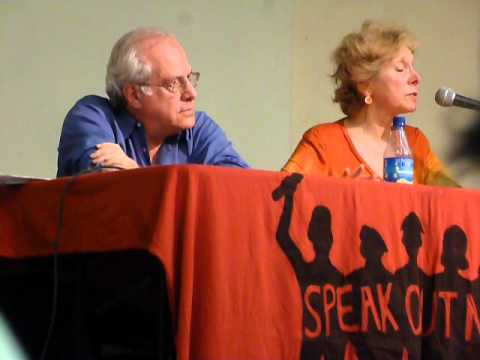
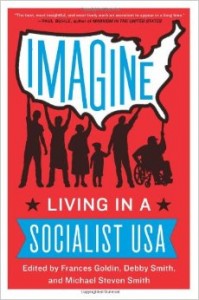
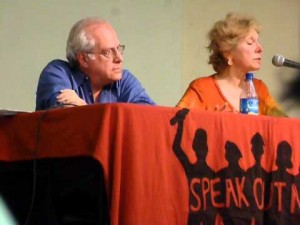
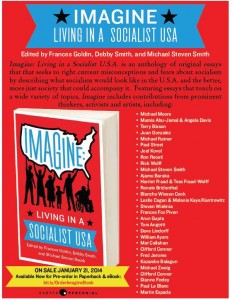
We continue to discuss the essays within the anthology Imagine: Living In A Socialist U.S.A. assembled and edited by our own co-host Michael Steven Smith, his wife Debby and Frances Goldin. Some of the most prominent activists, artists and experts have given their perspective about how the United States could exist as a socialist society. We’re joined today by Harriet Fraad, a hypnotherapist & psychotherapist in Manhattan. She is a contributor to the book with her essay Emotional and Sexual Life in a Socialist America written with Tess Fraad Wolff. Professor Rick Wolff joins us as well, we talk with him about his essay in the book titled The Shape of A Post-Capitalist Future.
Professor Rick Wolff:
- The willingness to ask the question. Can we do better than capitalism is what was the unifying theme across all these audiences. (regarding recent speaking tour) I think it should give encouragement and heart to everybody listening to this program, to understand how profoundly the wind has changed culturally, and ideologically and philosophically in the United States.
- Capitalism is generating its own critics, its own opponents at a breath taking rate.
- The way to get those people to rethink what socialism means is to revive parts of socialism that have gotten lost over the last century but I think now need to be put in the foreground.
- That’s how its going to change your daily life.
- What I concentrated on in the article is what would it mean if the place where people spend most of their adult life – at work – five out of seven days, best hours of each of those five days, you’re in your work place.
- Let’s talk about what socialism would mean differently from the way capitalism organizes it.
- In a capitalist workplace what most Americans have to face is that its a stunningly undemocratic arrangement.
- How about we democratize the work place? How about we bring democracy to the place it should have been introduced first in our society’s history, if we’re democratic, rather than last.
- That the workers should decide in assemblies, what to produce, how to produce, where to produce and what to do with the profits that after all, all the workers helped to produce.
- The major source of inequality of wealth is how businesses their net income. Their profits. Who gets them?
- They give their top official 200 hundred million dollar bonus packages, 50 million dollar bonus packages and what they don’t give to their top executives they pay out in dividends to their shareholders.
- 5 percent of the shareholders own 80 percent of the shares. If you distribute to shareholders, to distributing to unequal distributions of wealth.
- Socialists want those decisions to made democratically, by all the workers.
- If the workers together made the decision on how to distribute the profits they all helped to produce, you think they would give millions of dollars to a few top executives, while everybody else has to borrow money to send their kid to college.
- I want people to imagine how much better life would be if you handled the organization and the decision making in the enterprises of this society.
- This isolation that Harriet spoke of so movingly is catastrophic politically as long as we all act individually. We have to face and recognize that there are millions of people that want to go beyond capitalism.
- The first order of business is to bring them together in union and solidarity. They can have an impact on this society far beyond what they can achieve individually.
- I also work at being honest in not knowing how best to get people to be together and function together.
- If we could begin to mobilize. . .its important to understand that many of the ideas in this book are already majority points of view.
- When you go to work for another person in a capitalist system, an employer, and you sit down and you work out what you will do and you also work out what that employer will pay you.
- You know that the following is true. The only reason that employer will ever give you 20 dollars an hour is that during that hour, your brains and your muscles produce more than 20 dollars worth of stuff for that employer to sell. The employer will only give you 20 if he gets from you more than 20.
- That is a fundamentally unequal relationship.
Guest – Rick Wolff is Professor of Economics Emeritus, University of Massachusetts, Amherst where he taught economics from 1973 to 2008. He is currently a Visiting Professor in the Graduate Program in International Affairs of the New School University, New York City and directs the website Democracy At Work. Rick hosts the syndicated radio show Economic Update broadcast out of WBAI 99.5 FM.
——
Dr. Harriet Fraad:
- For most people, what they’re aware of is, unemployment is crushing their future or their present but they’re unaware that its crushing their personal lives as well.
- The first thing about capitalism is that what matters is profit.
- In order to profit, companies have outsourced American’s livings. From everything to manufacturing to accounting where you could fax the materials over to India where they speak English or law in terms of writing a brief, can be outsourced.
- People have been utterly looted in their personal lives because of only being a cipher on a profit ledger, not a person.
- 80 percent of the jobs that were lost during the recession were “male” jobs, in manufacturing, or construction which is often prefab or farmed out or jobs that require physical strength, that’s not really required anymore.
- There are two basis for male identity in the United States. One of them is having bread earner role and the other is having a loyal sexual partner and wife, and they’re both out the window.
- 70 percent of divorces are now initiated by women. Women are refusing to get married in the first place.
- Men are being rejected by women and by jobs.
- A lot of manhood has to do with pride, which in the United States has been replaced by shame. Shame is something the Republicans try to cultivate in anyone who doesn’t have money.
- The shame of not being a real person cause you can’t go out and buy stuff.
- The shame in not being able to support a wife and children. Shame easily leads to violence.
- Men have been rejected and are furious and don’t understand that its capitalism that has disempowered them.
- Americans don’t have the benefits of after school care, quality, free health care.
- People are disempowered and confused. Women don’t want to take care of men who won’t be able to support them and still demand full emotional and sexual services as well as child care.
- The biggest increase in married couples are couples that don’t have children. The biggest increase in households are single person households. People are alone.
- If you’re poor and alone, you can hang out at the mall and get arrested.
- People haven’t made the connection. Hey, honey its capitalism, nothing personal.
- They feel its their personal loss, which is why Americans which are 6 percent of the population of the world take 60 percent of the psych drugs.
- Porn which is often impersonal and degrading to women – hetero porn, is the way kids get sex education here. Porn is so profitable.
- The whole idea that the most important thing is connection is a socialist value. It’s all of us together. What we have is our majority and our connection that keeps this world going, rather than capitalists and their money to which we should all pay and obey.
- Americans at the point where they know this is an unjust system but they’re not quite at the point where they can say, and I will do something about it.
- You need to be willing to join with other people. That’s the primary thing.
Guest – Dr. Harriet Fraad, a hypnotherapist & psychotherapist in Manhattan. She is a contributor to the book with her essay Emotional and Sexual Life in a Socialist America written with Tess Fraad Wolff.
——————————————————————————-
Imagine: Living in a Socialist USA
CIA Sponsored Terror, Civil Liberties, Criminalizing Dissent, FBI Intrusion, Guantanamo, Habeas Corpus, Human Rights, Iraq War, Political Prisoner, Prison Industry, RFID, Supreme Court, Surveillance, Targeting Muslims, Torture, War Resister
Podcast: Play in new window | Download
Updates:
——–

Imagine: Living in a Socialist USA-Frances Goldin, Michael and Debby Smith
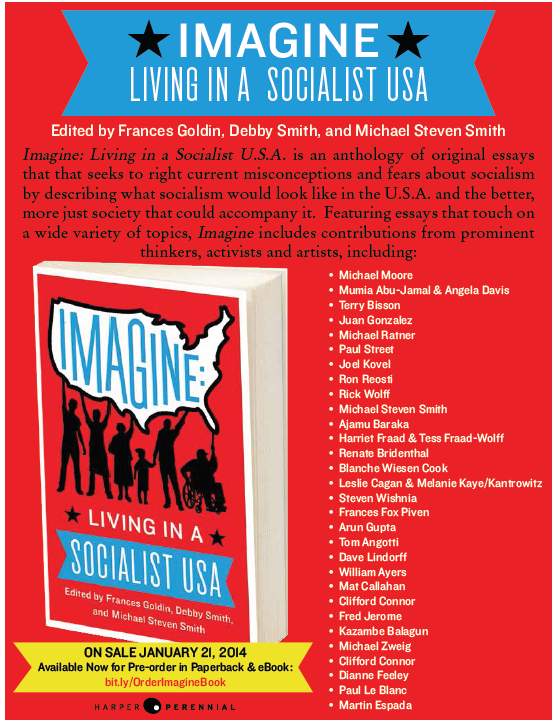
Our own co-host Michael Smith, his wife Debby and Frances Goldin have assembled and edited an anthology of powerful essays titled Imagine Living In A Socialist USA. Prominent thinkers, activists and artists have given their perspective of what the United States would look like through the lens of a socialist society. This new work is an important contribution to what we hope will be a broader movement. It includes an indictment of capitalism, an alternative U.S.A. and how to get there.
Frances Goldin:
- It was my brainchild because I wanted to accomplish 3 things before I joined by ancestors. One is everyone who lived in Cooper Square who had been fighting Robert Moses and saving their old tenements since 1959 its been a tremendous long struggle.
- This is the only community land trust in the Northeast. The only one.
- The next one is that I was really distressed at the direction our country was moving. Here I am 89 years old and all of a sudden North Carolina says that we’re going back to the old days where you had to bring in your right arm and read the Constitution without missing a word in order to vote. That plus spying on every American and continuing the wars.
- It was just breaking my heart. I was very distressed that everybody thought that socialism was a dirty word, it was an undemocratic terrible way of life and they just didn’t have a clue as to what it really meant.
- I thought it would be a great idea to pull together some of the greatest minds in the country and let them talk about health, education, welfare, homosexuality, every subject that effects American’s lives and explain how it would be different under socialism if it were democratically done, which is the only way it should be done.
- Within one year, 31 leading brains in the United States for no charge, they did it free, wrote their essays on each one of these subjects. The book is in my hand, its finished and its beautiful and it makes me so happy. That’s my second accomplishment.
- The third one is to see one of the leading intellectuals in the world free, forever free. Mumia Abu-Jamal.
- I couldn’t do it alone, it was a great plan and so I leaned on to dear friends, Debby and Michael Smith.
- I had to force Harper Collins into this, they really didn’t want to do it.
- We were very lucky to hire an incredibly good editor, whose livelihood was editing for magazines and newspapers. If a sentence was too long, he cut it into 2 or 3 sentences.
- Right now, the word socialism, people think of dictatorship, they think terrible things, they think undemocratic.
- This is a simple instruction about how it would effect us with regard to health, education, housing, welfare, all of those subjects which make it so difficult for all of us to live.
- It can’t be a dirty word, it happens to be the most democratic way of governing possible.
- Get the workers to run the company. It’s happening in Spain, with dozens of corporations that have become worker owned.
- It’s going to be the workers dividing the profits among themselves.
- It will only happen when the workers are angry enough and informed enough to know that they can run the show.
- Every penny of the royalties will go to free Mumia Abu-Jamal
- We are not earning one dime from this book. It was a labor of love. It was a labor of activism.
- It was a labor to change the world and make it a better place.
Guest – Frances Goldin is the President & Principal of Frances Goldin Literary Agency. Frances has worked in publishing for 63 years, as an agent and as editor-in-chief of a children’s publishing company; she founded the Frances Goldin Literary Agency and sold her first book in 1977. Authored by Black anthropologist Betty Lou Valentine and titled Hustling and Other Hard Work, the book continued to receive royalties for 32 years. One of the agency’s strengths is that many of its books continue to earn royalties long after publication. Reflecting Goldin’s radical politics, the Agency concentrates on literary fiction and serious, controversial, progressive non-fiction.
—–
Attorney Michael Smith:
- I don’t think its a dirty word, because people see what’s going on under capitalism and they don’t like it. The economic situation in this country ain’t gonna change, its only going to get worse.
- Frances is quite an influential literary agent in this country.
- What’s your definition of socialism? I said a democratic economy and political system, both where people from the bottom up control how we make a living, and how we live.
- We’re having a book launch on January 27. It’s at 126 Crosby Street in SOHO at the book store called Housing Works.
- In order to achieve the kind of socialism we’re talking about and that’s socialism from the bottom up you need a broad democratic movement of people.
- All the left wing parties, all the movement groups, we gotta get together around a common program.
- One of the chapters that I really like, and this isn’t to flatter you Michael Ratner, but you wrote a chapter on what I would do if I was US Attorney General.
- Paul LeBlanc writes his chapter about the 3rd American revolution. Diane Feeley writes about that in her chapter. She’s an auto worker retired from Detroit.
- Michael Zweig, the great sociologist, we reprint his speech from Occupy Wall Street where he talks about the 1 percent, the ruling class.
- He says actually its 1/10 of 1 percent. Those are the people who are the top of the economy and different organizations in this country. He said, you gotta be very careful, because these people will kill ya.
- In the second part of the book, we emphasize use your imagination. How do we organize the economy democratically?
- How do you organize a corporation democratically? Rick Wolff wrote that chapter.
- There are 31 chapters in the book. The last chapter suggests itself. How do we do it?
- We’re not against leadership, we’re against undemocratic leadership but you need people who’ve had some experience and who can draw the lessons of the past.
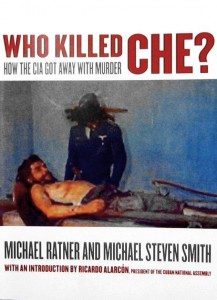
Guest – Attorney Michael Smith is co-host of Law and Disorder, and a New York City attorney and author. His most recent book, written with Michael Ratner , is Who Killed Che? How The CIA Got Away With Murder. He is on the boards of the Center for Constitutional Rights, and the Brecht Forum. He was educated at the University of Wisconsin in the 1960s, where he learned social history from the great teacher Harvey Goldberg. He has testified on Palestinian rights before committees of the US Congress and the United Nations.
Guest – Debby Smith is a long time socialist since going to college in Boston during the radical sixties. Debby worked full-time for the anti-Vietnam War movement, the Kent State Legal Defense Fund and in the feminist, union and socialist movements. She is also the wife of Michael Smith and participates in the anti-capitalist and pro-democracy movements that are growing rapidly in the United States and worldwide.
————————————————————————————————————
Afghanistan War, CIA Sponsored Terror, Civil Liberties, FBI Intrusion, Habeas Corpus, Human Rights, Surveillance, Targeting Muslims, Truth to Power
Podcast: Play in new window | Download
Updates:
- Lynne Stewart Released From Prison, Returns Home
- Media, Pennsylvania Activists Come Forward
- White House Report: “Liberty and Security in a Changing World”
——
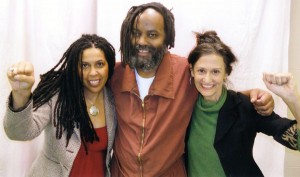

Mumia Abu-Jamal, Heidi Boghosian and Professor Johanna Fernandez
We at Law and Disorder have kept you updated on his case for the 10 years we’ve been broadcasting. It’s our pleasure to welcome Mumia Abu-Jamal as our special guest. Professor Johanna Fernandez joins us as Mumia calls from SCI Mahanoy in Frackville, Pennsylvania. Johanna is a Professor of History at Baruch College and co-coordinator of the newly launched campaign to bring Mumia home.
Mumia Abu-Jamal:
- I remember with quite a degree of distinction receiving in the mail, a packet full of xeroxed FBI files.
- I believe by 1971, I had left the party. I read through files that named names and detailed internal affairs of the Black Panther Party of Philadelphia, the national office, other organizations, activists all through out the city and the region.
- We lived in communal apartments and houses. We lived together we worked out of the same offices, we spent all day together with each other.
- To read about lies that were in those files, and the people that you knew for years that were FBI informants, stuff like that, it was absolutely mind blowing.
- Media, Pennsylvania story: I think they are the linear ancestors of Edward Snowden.
- These were anti-war people for the most part, living their own lives but willing to make a contribution to the movement, because they were part of the movement.
- It’s interesting that these file come out now, because for someone who has been reading and writing recently, about the Reverend Dr. Martin Luther King Jr., people know now that the FBI taped hotel rooms where Martin and Ralph David Abernathy and other civil rights activist were staying.
- They tried to use those tapes to blackmail Martin King and actually force him into suicide.
- This was all part of Hoover’s plan to destroy the Black Freedom Movement and any movement that was against what the government was doing.
- It’s interesting that Law and Disorder is talking about 9/11 when right there in New York you have an estimated 100 cops who used 9/11 to justify scamming the public. Cops, prison guards and a few firefighters.
- When you think about the ordinary heroes. These are people whose names are not known. Those nameless black mothers, grandmothers, sisters and daughters, they made that movement possible. (Black Freedom Movement)
- Even if you think of Edward Snowden. He’s an average guy, no college education, he’s like a computer whiz. Now he got a great job and he resolved in his mind, in his heart, in his soul, that he would not be silent about the things he saw and heard.
- BringMumiaHome.com
- Law and Disorder Interview – The Framing of Mumia Abu Jamal by J.Patrick O’Connor
Guest – Mumia Abu-Jamal is a renowned journalist from Philadelphia who has been in prison since 1981 and was on death row since 1983 for allegedly shooting Philadelphia police officer Daniel Faulkner. After decades of appeals, he left death row in 2012 but is still facing a life sentence. He is known as the “Voice of the Voiceless” for his award-winning reporting on police/state violence brutality and other social and racial epidemics that plague communities of color in Philadelphia and throughout the world.
——
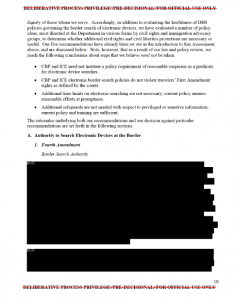

Federal Court Allows For DHS Laptop Searches At Border
Each year, thousands of American citizens returning from abroad are subjected to searches of their laptops, cell phones and other personal devices. The Department of Homeland Security claims it has the right to such searches regardless of whether the traveler is suspected of wrongdoing.
A federal court recently dismissed a 2010 lawsuit against the DHS. The ACLU, and the National Association of Criminal Defense Lawyers, filed the suit on behalf of Pascal Abidor, a dual French-American citizen whose laptop was searched and confiscated at the Canadian border, as well as the National Press Photographers Association and the NACDL. Abidor was traveling from Montreal to NY on Amtrak when his laptop was searched and taken by customs officers. He was questioned, taken off the rain in handcuffs and held in a cell for several hours. When his laptop was returned, many of his files, chats and photos had been searched.
Attorney Brian Hauss:
- The agent opened Mr Abidor’s laptop and started looking through the files on his desktop.
- She found a couple pictures that she showed to agents around her. She turned the laptop around to see what he thought about the pictures she identified.
- One was a picture of a Hamas rally in Israel, and the other picture was of a Hezbollah rally in Lebanon.
- Mr Abidor explained that these were related to his graduate work in Islamic studies.
- The agents thought these pictures were suspicious, and they took Mr. Abidor off the train, the train left without him. They put him in handcuffs and placed him in a holding cell where he was forced to wait for several hours.
- While he was there, the agents interrogated him about his studies, his associations, his interests in Islam, etc.
- Eventually they decided there was no evidence of wrong doing. They decided to let him go but not before seizing all his electronic devices and specifically detaining his laptop for an indefinite period of time.
- When they returned his laptop 11 days later he was able to determine from the last open date on his files, that the government had actually inspected his personal photographs a transcript of a chat he had with his girlfriend, copies of his email correspondence, class notes, journal articles, tax returns, his graduate school transcript and even his resume.
- He decided to come to us and we brought a lawsuit on his behalf challenging this policy.
- David House is a very talented computer programmer who lives in Cambridge, Massachussetts and he was at one time deeply involved in the Bradley Manning support network.
- The government figured out that David House was related to Chelsea Manning and they wanted to question him in connection with the Wikileaks investigation.
- They set up an alert in the data base, known as the Text Database. It let the government know whenever Mr. House was leaving the country.
- When Mr House returned (from leaving the country) government agents were waiting for him at Chicago O’Hare.
- They interrogated Mr. House about wikileaks and his political activities and confiscated his laptop and electronic devices.
- When we brought a lawsuit on Mr. House’s behalf and actually settled with the government, the DHS notes after reviewing all of his materials after going through every file on his laptop . . concluded there was absolutely no evidence to seize these devices. There was strong reason to believe they knew this from the beginning and they knew they couldn’t get a probable cause warrant by a judge.
- As we understand it, the DHS can put anyone it likes into the Text Database.
- Our understanding is that from October 1, 2008 to June 2, 2010 more than 6,500 people.
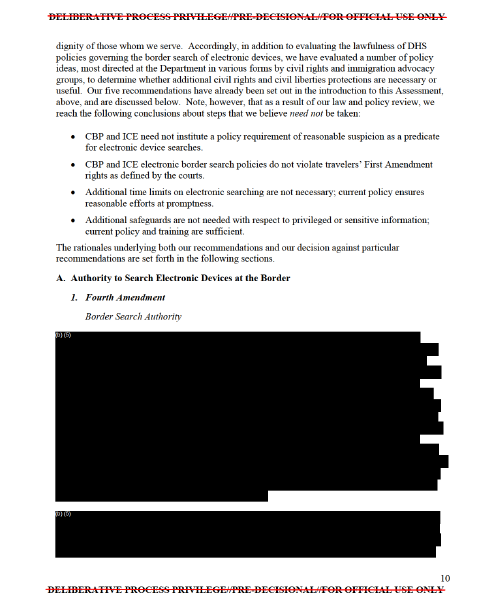
- What we asked for in our FOIA request was the DHS Civil Rights and Civil Liberties Impact Report on border searches. We ultimately got the report with some redactions pertaining to the government’s legal analysis of why its allowed to engage in suspicionless searches.
Guest – Brian Hauss, the William J. Brennan Fellow with the ACLU’s Speech, Privacy, and Technology Project. At the ACLU, he has been involved in litigation challenging the federal government’s suspicionless search and seizure of laptops and other electronic devices at the international border. Brian is a graduate of Yale University and Harvard Law School. After graduation from law school, he served as a law clerk to the Honorable Marsha Berzon of the United States Court of Appeals for the Ninth Circuit.
——————————————————————————————
Books From Law and Disorder Hosts
Civil Liberties, Criminalizing Dissent, FBI Intrusion, Habeas Corpus, Human Rights, Political Prisoner, Prison Industry, Supreme Court, Surveillance, Truth to Power
Podcast: Play in new window | Download

Lawyers You’ll Like: Professor Holly Maguigan
In our Lawyers You’ll Like series we’re joined by Professor Holly Maguigan, Professor of Clinical Law at the New York University School of Law, where she teaches Comparative Criminal Justice Clinic: Focus on Domestic Violence and Evidence. Professor Maguigan is an expert on the criminal trials of battered women. Her research and teaching is interdisciplinary. Professor Maguigan is a member of the Family Violence Prevention Fund’s National Advisory Committee on Cultural Considerations in Domestic Violence cases. She serves on the boards of directors of the National Clearinghouse for the Defense of Battered Women and the William Moses Kunstler Fund for Racial Justice. She is a past co-president of the Society of American Law Teachers, the largest membership organization of law professors in the U.S.
Professor Holly Maguigan:
- I was doing medieval history and I was at Berkeley. It was 1967 and Oakland stopped the draft.
- I got very interested in the anti-war politics.
- I hated lawyers. I really hated lawyers. They were boring. They talked about themselves all the time. They only had stories about their cases and how great they were and they would never post bail when people got arrested.
- The University of Pennsylvania in Philadelphia is where I stayed for 17 years.
- First I started out as a public defender. I loved being a public defender, it was the beginning and end of everything I hoped it would be.
- That’s where I met David Rudovsky and David Kairys. They were then defenders while I was a student.
- After they went out on their own, they kept inviting me to join them. I kept putting it off because I loved being a defender so much.
- In Philadelphia there was much more actual litigation, not just motion litigation there’s a lot of that here in New York City but actual trials.
- You had a sense, there was an analysis that people were doing life on the installment plan and you needed to do what you could to kick them loose any particular time.
- It was a community in its own odd way and I found it difficult to leave it.
- I was doing major felonies within a couple of years.
- David Kairys was very focused on constitutional litigation and government misconduct. He did the Camden 28 which was a big draft resistance case.
- My interest was more into criminal defense.
- Grand juries (all over the country) convened to investigate the alleged transportation of Patty Hearst by the SLA from California where she had been captured.
- He was a killer. (Frank Rizzo) There was no question. More people died in police actions before or since.
- I don’t mean to suggest that all the police started out as homocidal. This was a situation which from the top down came the message if you’re a good cop then you’re going to take people out however you think you need to.
- I knew about race and class bias in the court room as much as a white woman who was middle class could know.
- I was just blown away by what happens when you add hatred of women to hatred of black people and hatred of poor people.
- Judges would go by me in the hall and say Maguigan, ahem, you didn’t give me anything this Christmas, not even one lousy bottle, you’re not getting any assignments.
- Judges would do things, like open the drawer in their chambers, and there would be wads of bills, and they’d let you know.
- I developed a specialty on women who kill men.
- In the early eighties a group in Philadelphia called Women Against Abuse began working and they did advocacy for battered women accused of crime and meant a huge difference.
- The battered women cases I was working on were quite consuming because people then didn’t know very much in how to try these cases.
- The judges expected you to plead insanity or guilty. Reasonable doubt was a consideration at sentencing not at trial.
- There were cases that did require teams. There was no question.
- I wanted to be in court. I wanted to be in the presence of that conflict between the authorities and regular people.
- I went to NYU where I taught in the criminal defense clinic for many years.
- To see students react to the great stories their clients have is just amazing.
- SALT (Society of American Law Teachers) is about who gets into law school, what they learn and who teaches them. It’s about access to justice. It’s about relating to law school as a place where you train people to do social justice. SALT’s focus is on students and teaching.
- Holly Maguigan to be honored by Society of American Law Teachers.
Guest – Professor Holly Maguigan teaches a criminal defense clinic and one in comparative criminal justice as well as a seminar in global public service lawyering and a course in evidence. She is an expert on the criminal trials of battered women. Her research and teaching are interdisciplinary. Of particular importance in her litigation and scholarship are the obstacles to fair trials experienced by people accused of crimes who are not part of the dominant culture. Professor Maguigan is a member of the Family Violence Prevention Fund’s National Advisory Committee on Cultural Considerations in Domestic Violence cases. She serves on the boards of directors of the National Clearinghouse for the Defense of Battered Women and the William Moses Kunstler Fund for Racial Justice. She is a past co-president of the Society of American Law Teachers, the largest membership organization of law professors in the U.S.
——————————————————————————-
Books From Law and Disorder Hosts
Civil Liberties, Criminalizing Dissent, Extraordinary Rendition, FBI Intrusion, Guantanamo, Habeas Corpus, Human Rights, Political Prisoner, Prison Industry, Supreme Court, Surveillance, Targeting Muslims, Torture, Truth to Power, War Resister
Podcast: Play in new window | Download
Updates:
- Judge Leon Rules That NSA Meta Data Collection Is Likely Unconstitutional.
- Michael Ratner: It Could Be The Deathknell For This Kind Of MetaData Collection
- Ed Snowden’s Response To Judge Leon’s Decision
- Ed Snowden’s Open Letter To The People Of Brasil
- A Christmas Card From Chelsea Manning
- Guantánamo Five: Military Commissions – Their Torture Memories Are . . Classified.
- First Commander Lenhardt: Guantánamo Should Never Have Opened
- American Studies Association Supports Boycott Of Israeli Academic Institutions
——


Over Policing of America: The Criminalization of Everyday Life
In his recent article titled Over Policing of America, attorney Chase Madar outlines a familiar narrative such as the militarization of police, stop and frisk, and how students get swept into the school to prison pipeline. The pattern is clear and who benefits is obvious in the list of over policing examples compiled by our returning guest, such as criminalizing immigration and how simple economic transactions are closely scrutinized by under-cover police.
Attorney Chase Madar:
- I’m hoping this new term will enter the national lingo; over-policing.
- What I wrote about is how the police paradigm has entered the DNA of social policy across the board in the United States in matters that a generation ago would not require police or prosecutors or criminal law, now suddenly do.
- That’s in education, in immigration, in family law, even how we regulate the economy.
- All of these spheres, domains of everyday life are increasingly regulated by police and prosecutors.
- A creeping police state. We need to take a very sobering look at how we’re governing ourselves and how criminal law is displacing and devouring all other kinds of social regulation.
- You see this more and more disciplinary matters in schools get outsourced to police departments.
- Police people are trained to respond to crimes, and to respond to everything as a crime. That’s the nature of police.
- When you send police into a school, the crime is going to sky rocket.
- Even the way we regulate our economy is suffering from an overdose of criminal law and police powers.
- What we have frequently is white collar work getting criminalized by a mare’s nest of criminal laws that are very complex, very difficult to understand.
- It’s not like we have a great financial system that was abused by a few bad apples. We have a really crappy system that’s legal because these people write the laws.
- Immigration law was mostly under the domain of administrative law with milder penalties, civil penalties.
- We’re kidding ourselves if we pretend that’s somehow aberrational.
- Although our political class seems incapable of doing anything constructive about it, they are very adept at channeling all fears about security in any sense into criminal law crack downs and ratcheting up the police state.
- Our incarceration rate is three times higher than the old East Germany.
- I think we need to switch very swiftly to alternative ways of social policy in holding our society together other than throwing cops and prosecutors at it.
Guest – Attorney Chase Madar , a TomDispatch regular and author of a new book, The Passion of Bradley Manning (OR Books). Madar tweets @ChMadar. He’s a contributor to the London Review of Books and Le Monde diplomatique and the author of a new book, The Passion of Bradley Manning (OR Books).
——————————————————-
Books From Law and Disorder Hosts